
Why a Bond Fund May Show a Loss Even as Its Value Increases

Investors sometimes notice something peculiar when reviewing their bond funds: the value of their investment has increased, yet their account statement shows a negative return.
The explanation may lie in how bond funds distribute and reinvest income.
Unlike stocks, which investors often purchase primarily for price appreciation, bonds are generally purchased for the income they generate. Bond funds typically distribute this income monthly.
When a bond fund pays a distribution, its share price generally declines by approximately the amount distributed. If that distribution is automatically reinvested, the investor receives additional shares of the fund.
Over time, an investor may accumulate more shares and see the total value of the investment increase, even while the fund’s share price remains below its original purchase price.
This can create an apparent contradiction: the investment has grown in value, but the account still displays a negative unrealized gain because the reinvested distributions have increased the investor’s cost basis.
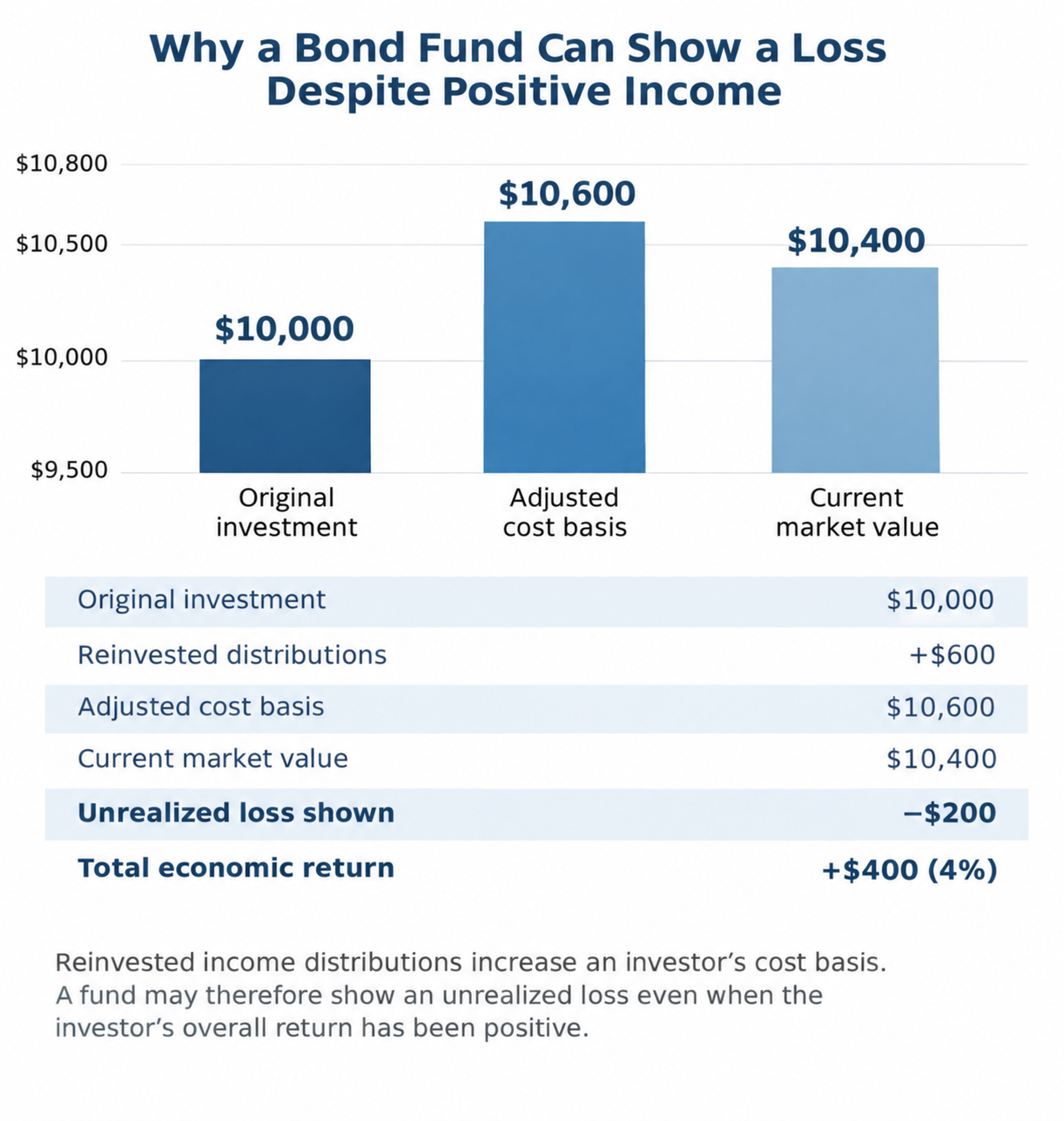
The important distinction is between unrealized gains and total return. A properly calculated total return includes both changes in share price and the income generated by the investment.
For bond fund investors, looking at price appreciation alone may tell only part of the story.
-Zac